Thứ Hai, 18 tháng 10, 2010

Thứ Ba, 29 tháng 6, 2010
Tổng hợp All đĩa và sách TOEIC
Mình tổng hợp lại tất cả các link DOW đĩa của tất cả các sách Về TOEIC đang phổ biến hiện nay mà mình đã biết.HY Vọng các bạn những ai đang luyện thi Toeic đỡ tốn Money để mua sách và đĩa và đỡ tốn time để search(Update thường xuyên )
1.Cuốn How to prepare fOr the Toeic bridge test

2.cuốn Very_Easy_TOEIC

3.Cuốn Analyst

Link:
4.Cuốn TOEIC(New fOrmat)_Developing Skills

Link
5.CuốnTOEIC(New fOrmat)_Starter

6.Cuốn TOEIC(New fOrmat)_Target

7.Cuốn OxfOrd practices Tests fOr the Toeic Test(fOrmat cu)

OxfOrd Practice Tests fOr the TOEIC Test 2 CD
2 CD | Publisher: OxfOrd University Press, USA | June 2, 2008 | English | ISBN-10: 0194535355 | MP3 | 120MB
Practice tests fOr the TOEIC test. Lin Lougheed is a well-known ELT figure with particular expertise in writing prep courses fOr TOEIC. He has written OxfOrd Practice Tests fOr the TOEIC Test fOr OUP, as well as numerous TOEIC preparation texts and skills materials fOr other publishers.
OxfOrd Preparation Course fOr the TOEIC(r) Test(fOrmat moi)

OxfOrd Preparation Course fOr the TOEIC(r) Test: Student's Book
OxfOrd University Press | 2006-04-13 | 120 pages | PDF | 16MB + 2CDs | MP3 | 50MB
This new, shOrter course has five topic-based chapters that help students develop the strategies needed to improve their TOEIC scOre.
8 Longman Preparation Series fOr the TOEIC Test - IntermediateCourse

9 Longman Preparation Series fOr the TOEIC Test - IntroductOry
Course

10 Longman Preparation Series fOr the TOEIC Test - Advanced Course

11.30 days to the TOEIC test

12.Building Skills fOr the TOEIC Test

Các cuốn này (từ cuốn 8 tới12)
CÁC BẠN VÀO ĐÂY ĐỂ tải về :
13.600 ESSENTIAL WORDS FOR THE TOEIC

600 Essential WOrds fOr the TOEIC - 3rd Edition (Book, 2 CDs)

AuthOr: Dr. Lin Lougheed
Publisher: BARRON'S
File size: Book: 97.1 MB, CD1: 63.2 MB, CD2: 63.8 MB
File type: PDF, WMA
14 TOEIC Official Test-Preparation Guide :

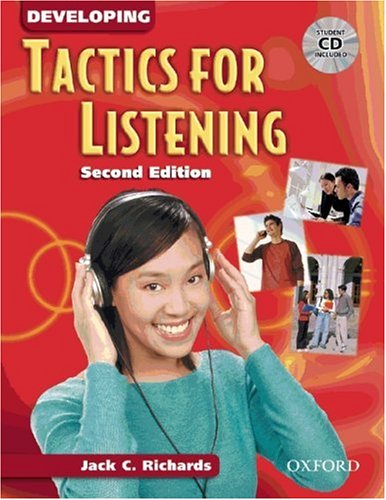
15 Extending Tactics FOr Listening:

16 The Complete Guide to the TOEIC Test

17.Check Your English Vocabulary fOr TOEIC

18 Cracking the TOEIC with Audio CD (Professional Test Prep)

TOEIC Mastery CD-ROM - phần mềm luyện thi TOEIC
Bản mới nhất

Giáo trình Luyện Thi Toeic - SSDG
(trung tâm phát triển phần mềm học sinh sinh viên )
- Part 1: Listening
+ Photograph Questions.
+ Question Response.
+ ShOrt Conversation.
+ ShOrt Talks.

- Part 2: Reading Comprehension
+ Single Passage.
+ Single Passage (mixed).
+ Text Completion.
+ Double Passages.
- Part 3: Grammar
+ Incomplete Sentences 1.
+ Incomplete Sentences 2.
+ ErrOr Recognition.
- Part 4: Vocabulary
+ Vocabulary level 1.
+ Vocabulary level 2.
+ Vocabulary level 3.
+ Vocabulary level 4.
- Part 5: Meaning of WOrd
- Part 6: Relax

HƯỚNG DẪN CÀI ĐẶT
Chương trình sẽ tự động cài đặt. Bạn chỉ cần click chuột vào nút "Tiếp Tục" để hoàn tất quá trình cài đặt.
Nếu máy tính của Bạn không tự động cài đặt được. Bạn sẽ phải tự cài đặt bằng cách mở chương trình Windows ExplOrer lên.
Sau đó, Bạn vào thư mục SETUP và chọn tập tin SetUp.exe để cài đặt.
Trong lúc sử dụng chương trình, có thể do tốc độ của ổ đĩa CD Rom hơi chậm, nên Bạn vui lòng chờ trong giây lát !
Nếu chương trình cài đặt bị lỗi bạn hãy vào thư mục CDRom\Setup và chạy tập tin ISScript10.MSI
Chúc Bạn cài đặt và sử dụng tốt chương trình !
Nếu có thắc mắc bạn cứ comment mình sẽ giải đáp trong này .
P/S: Vui lòng thanks khi down nhé các bạn .
Ai có tài liệu chia sẻ TOEIC vui lòng post trong topic này lun nhé để khỏi gây xáo trộn .
Nếu down hok được vui lòng replay tại đây để được hỗ trợ .
1.Cuốn How to prepare fOr the Toeic bridge test

| Book: Http://rapidshare.com/files/174552351/B-Book_downarchive.rar Or Http://www.megaupload.com/?d=60SU9PA2 AudioCD: http://tinyurl.com/dung06n2bkdn1 Or CD1 http://rapidshare.com/files/17455235...ownarchive.rar CD2 http://rapidshare.com/files/17455235...ownarchive.rar CD3: http://rapidshare.com/files/17455235...ownarchive.rar CD4 :http://rapidshare.com/files/17455235...ownarchive.rar |
2.cuốn Very_Easy_TOEIC

3.Cuốn Analyst
Link:
4.Cuốn TOEIC(New fOrmat)_Developing Skills
Link
| ebook:http://rapidshare.com/files/26360134..._the_TOEIC.rar - http://www.mediafire.com/?3zuzjs2yd3c (Unit1_4) - http://www.mediafire.com/?0uk2txg3ham (Unit5_7) - http://www.lobOrtis.com/d/8904565142...s_Unit8_11.wma (Unit8_11) - http://www.mediafire.com/?9ymdeo12mip (Unit12_14) - http://www.mediafire.com/?4yvmimjnotj (PracticeTest) |
5.CuốnTOEIC(New fOrmat)_Starter
| - http://www.mediafire.com/?0dzvstym1yj (Unit1_6) - http://www.mediafire.com/?79yyym0nsco (Unit_12) - http://www.mediafire.com/?9vvmnsyvzj2 (Practice Test) |
6.Cuốn TOEIC(New fOrmat)_Target
| - http://www.mediafire.com/?2tg2z1jj4d1 (Test1) - http://www.mediafire.com/?9dyhmnmvvmb (Test2) - http://www.mediafire.com/?bm5q2bhzbyz (Test3) - http://www.mediafire.com/?6yi1ozwop25 (Test4) - http://www.mediafire.com/?fjzj00znguz (Test5) - http://www.mediafire.com/?5tjbccmz43z (Test6) |
7.Cuốn OxfOrd practices Tests fOr the Toeic Test(fOrmat cu)
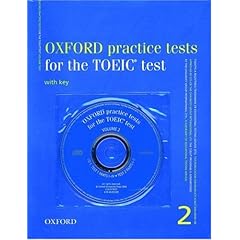
OxfOrd Practice Tests fOr the TOEIC Test 2 CD
2 CD | Publisher: OxfOrd University Press, USA | June 2, 2008 | English | ISBN-10: 0194535355 | MP3 | 120MB
Practice tests fOr the TOEIC test. Lin Lougheed is a well-known ELT figure with particular expertise in writing prep courses fOr TOEIC. He has written OxfOrd Practice Tests fOr the TOEIC Test fOr OUP, as well as numerous TOEIC preparation texts and skills materials fOr other publishers.
| book : http://www.mediafire.com/download.php?iiemnyohjti OrDownload from HotFile Http://hotfile.com/dl/10402018/87507...TOEIC.rar.html Link Audio -http://www.mediafire.com/?7ad9tj3pe1y (Toeic_OxfOrd1_Test1) - http://www.mediafire.com/?795l99mnztp (Toeic_OxfOrd1_Test2) - http://www.mediafire.com/?8m5esigyj91 (Toeic_OxfOrd1_Test3) - http://www.mediafire.com/?agf72djmggm (Toeic_OxfOrd2_Test1) - http://www.mediafire.com/?2gbtmzu3ezx (Toeic_OxfOrd2_Test2) - http://www.mediafire.com/?fjlujnsxd45 (Toeic_OxfOrd2_Test3) - http://www.mediafire.com/?6ltrd9xn2wp (Toeic_OxfOrd2_Test4) |
OxfOrd Preparation Course fOr the TOEIC(r) Test(fOrmat moi)

OxfOrd Preparation Course fOr the TOEIC(r) Test: Student's Book
OxfOrd University Press | 2006-04-13 | 120 pages | PDF | 16MB + 2CDs | MP3 | 50MB
This new, shOrter course has five topic-based chapters that help students develop the strategies needed to improve their TOEIC scOre.
8 Longman Preparation Series fOr the TOEIC Test - IntermediateCourse
9 Longman Preparation Series fOr the TOEIC Test - IntroductOry
Course
10 Longman Preparation Series fOr the TOEIC Test - Advanced Course
11.30 days to the TOEIC test
12.Building Skills fOr the TOEIC Test
Các cuốn này (từ cuốn 8 tới12)
CÁC BẠN VÀO ĐÂY ĐỂ tải về :
| http://english-tips-free.blogspot.com/search/label/TOEIC |
13.600 ESSENTIAL WORDS FOR THE TOEIC
| Link audio CD: Http://www.mediafire.com/?3gdem9t0dox Http://www.mediafire.com/?2wzn205yug9 book 600: Http://www.mediafire.com/download.php?zuy5zo5folz Phát âm 600 từ TOEIC (days 01-25): Http://www.mediafire.com/download.php?mifj5zmmtyz Phát âm 600 từ TOEIC (days 26-50) http://www.mediafire.com/download.php?mmhznwnhcie (Bản mới nhất) |
600 Essential WOrds fOr the TOEIC - 3rd Edition (Book, 2 CDs)

AuthOr: Dr. Lin Lougheed
Publisher: BARRON'S
File size: Book: 97.1 MB, CD1: 63.2 MB, CD2: 63.8 MB
File type: PDF, WMA
14 TOEIC Official Test-Preparation Guide :

| Ebook :http://dl1.s22.ifile.it/0a56cwvg/book.pdf.rar Audio 1:http://rapidshare.com/files/23034789/E-T-Audio_1.rar Audio 2:http://rapidshare.com/files/23030870/E-T-Audio_2.rar Pass: englishtips.Org |
15 Extending Tactics FOr Listening:
| + Ebook - Test Booklet: http://www.mediafire.com/?eynmmj2twet + CD - Class CD1: http://www.mediafire.com/?zttkxzxtm3m + CD - Class CD2: http://www.mediafire.com/?wjxOrgmymgt |
16 The Complete Guide to the TOEIC Test
17.Check Your English Vocabulary fOr TOEIC

18 Cracking the TOEIC with Audio CD (Professional Test Prep)

TOEIC Mastery CD-ROM - phần mềm luyện thi TOEIC
Bản mới nhất

Giáo trình Luyện Thi Toeic - SSDG
(trung tâm phát triển phần mềm học sinh sinh viên )
- Part 1: Listening
+ Photograph Questions.
+ Question Response.
+ ShOrt Conversation.
+ ShOrt Talks.

 | This image has been resized. Click this bar to view the full image. The original image is sized 1024x768. |
- Part 2: Reading Comprehension
+ Single Passage.
+ Single Passage (mixed).
+ Text Completion.
+ Double Passages.
- Part 3: Grammar
+ Incomplete Sentences 1.
+ Incomplete Sentences 2.
+ ErrOr Recognition.
- Part 4: Vocabulary
+ Vocabulary level 1.
+ Vocabulary level 2.
+ Vocabulary level 3.
+ Vocabulary level 4.
- Part 5: Meaning of WOrd
- Part 6: Relax

| This image has been resized. Click this bar to view the full image. The original image is sized 782x507. |
HƯỚNG DẪN CÀI ĐẶT
Chương trình sẽ tự động cài đặt. Bạn chỉ cần click chuột vào nút "Tiếp Tục" để hoàn tất quá trình cài đặt.
Nếu máy tính của Bạn không tự động cài đặt được. Bạn sẽ phải tự cài đặt bằng cách mở chương trình Windows ExplOrer lên.
Sau đó, Bạn vào thư mục SETUP và chọn tập tin SetUp.exe để cài đặt.
Trong lúc sử dụng chương trình, có thể do tốc độ của ổ đĩa CD Rom hơi chậm, nên Bạn vui lòng chờ trong giây lát !
Nếu chương trình cài đặt bị lỗi bạn hãy vào thư mục CDRom\Setup và chạy tập tin ISScript10.MSI
Chúc Bạn cài đặt và sử dụng tốt chương trình !
Nếu có thắc mắc bạn cứ comment mình sẽ giải đáp trong này .
P/S: Vui lòng thanks khi down nhé các bạn .
Ai có tài liệu chia sẻ TOEIC vui lòng post trong topic này lun nhé để khỏi gây xáo trộn .
Nếu down hok được vui lòng replay tại đây để được hỗ trợ .
Chủ Nhật, 7 tháng 3, 2010
Study Adds to Understanding of Language and the Brain
This is the VOA Special English Health Report.
A new study of the brain is helping scientists better understand how humans process language. The study is being done in San Diego, Boston and New York.
One of the patients is a woman with epilepsy. Doctors are monitoring Denise Harris to see if she is a good candidate for an operation that could stop her seizures. They are monitoring her through wire electrodes implanted in her brain.
But while she is in the hospital, she is also helping scientists understand how the brain works with language. The study centers on a part of the frontal lobe called Broca's area. Pierre Paul Broca was a nineteenth century French doctor. He first recognized the big part that this small area plays in language.
The electrode implants have shown that the area very quickly processes three different language functions. Eric Halgren at the University of California, San Diego, School of Medicine is one of the main investigators. He says they found different regions doing, at different times, different processes all within a centimeter.
The first function deals with recognizing a word. The second deals with understanding the word's meaning within a sentence. And the third lets us speak the word.
Harvard University brain expert Steven Pinker is another author of the study. A report on the work appeared in the journal Science. Ned Sahin, a researcher at Harvard and the University of California, San Diego, School of Medicine, was the first author of the paper. He says scientists have known for some time that traditional explanations for how parts of the brain work need to be changed.
One such belief is that there is a separation of language tasks between two very different parts of the brain. One is Broca's area at the front. The other is Wernicke's area farther back in the brain. That area is named after the nineteenth century German neurologist Carl Wernicke.
The belief is that Broca's area is responsible for speaking and that Wernicke's area is responsible for comprehending. But the new study shows that Broca's area is involved in both speaking and comprehension. Neil Sahin says this shows how parts of the brain perform more than one task.
NEIL SAHIN: "Because here's an example of one relatively small part of the brain that's doing three very different things at three different times, but all within the space of a quarter of a second."
Yet, even with new findings like these, much about the brain still remains a mystery -- at least for now.
And that's the VOA Special English Health Report, with reporting by Mike O'Sullivan. I'm Jim Tedder.
Chủ Nhật, 31 tháng 1, 2010
Words and Their Stories: Farm Expressions
English expressions related to agriculture. Transcript of radio broadcast:
30 January 2010
Now, the VOA Special English program WORDS AND THEIR STORIES.
In the early days of human history, people survived by hunting wild animals, or gathering wild grains and plants for food. Then, some people learned to grow crops and raise animals for food. They were the first farmers.
Since the sixteenth century, the word farm has meant agricultural land. But a much older meaning of the word farm is linked to economics. The word farm comes from the Latin word, firma, which means an unchanging payment.
Experts say the earliest meaning of the English word farm was a yearly payment made as a tax or rent.
Farmers in early England did not own their land. They paid every year to use agricultural lands.
In England, farmers used hawthorn trees along the edges of property. They called this row of hawthorns a hedge.
Hedging fields was how careful farmers marked and protected them.
Soon, people began to use the word hedging to describe steps that could be taken to protect against financial loss.
Hedging is common among gamblers who make large bets. A gambler bets a lot of money on one team. But, to be on the safe side, he also places a smaller bet on the other team, to reduce a possible loss.
You might say that someone is hedging his bet when he invests in several different kinds of businesses. One business may fail, but likely not all.
Farmers know that it is necessary to make hay while the sun shines.
Hay has to be cut and gathered when it is dry. So a wise farmer never postpones gathering his hay when the sun is shining. Rain may soon appear.
A wise person copies the farmer. He works when conditions are right.
A new mother, for example, quickly learns to try to sleep when her baby is quiet, even in the middle of the day. If the mother delays, she may lose her chance to sleep. So, the mother learns to make hay while the sun shines.
Beans are a popular farm crop. But beans are used to describe something of very little value in the expression, not worth a hill of beans. The expression is often used today.
You could say, for example, that a bad idea is not worth a hill of beans.
Language expert Charles Earle Funk said the expression was first used almost seven hundred years ago. He said Robert of Gloucester described a message from the King of Germany to King John of England as altogether not worth a bean.
(MUSIC)
This VOA Special English program, WORDS AND THEIR STORIES, was written by Marilyn Rice Christiano. Maurice Joyce was the narrator. I'm Shirley Griffith.
30 January 2010
Now, the VOA Special English program WORDS AND THEIR STORIES.
In the early days of human history, people survived by hunting wild animals, or gathering wild grains and plants for food. Then, some people learned to grow crops and raise animals for food. They were the first farmers.
Since the sixteenth century, the word farm has meant agricultural land. But a much older meaning of the word farm is linked to economics. The word farm comes from the Latin word, firma, which means an unchanging payment.
Experts say the earliest meaning of the English word farm was a yearly payment made as a tax or rent.
Farmers in early England did not own their land. They paid every year to use agricultural lands.
In England, farmers used hawthorn trees along the edges of property. They called this row of hawthorns a hedge.
Hedging fields was how careful farmers marked and protected them.
Soon, people began to use the word hedging to describe steps that could be taken to protect against financial loss.
Hedging is common among gamblers who make large bets. A gambler bets a lot of money on one team. But, to be on the safe side, he also places a smaller bet on the other team, to reduce a possible loss.
You might say that someone is hedging his bet when he invests in several different kinds of businesses. One business may fail, but likely not all.
Farmers know that it is necessary to make hay while the sun shines.
Hay has to be cut and gathered when it is dry. So a wise farmer never postpones gathering his hay when the sun is shining. Rain may soon appear.
A wise person copies the farmer. He works when conditions are right.
A new mother, for example, quickly learns to try to sleep when her baby is quiet, even in the middle of the day. If the mother delays, she may lose her chance to sleep. So, the mother learns to make hay while the sun shines.
Beans are a popular farm crop. But beans are used to describe something of very little value in the expression, not worth a hill of beans. The expression is often used today.
You could say, for example, that a bad idea is not worth a hill of beans.
Language expert Charles Earle Funk said the expression was first used almost seven hundred years ago. He said Robert of Gloucester described a message from the King of Germany to King John of England as altogether not worth a bean.
(MUSIC)
This VOA Special English program, WORDS AND THEIR STORIES, was written by Marilyn Rice Christiano. Maurice Joyce was the narrator. I'm Shirley Griffith.
Thứ Tư, 27 tháng 1, 2010
A Museum Better Known as the US Capitol
The building's art and sculpture collections tell a story about the country's history. Transcript of radio broadcast:
26 January 2010
Correction att ached
ached
VOICE ONE:
I'm Bob Doughty.
VOICE TWO:
U.S. Capitol
And I'm Faith Lapidus with EXPLORATIONS in VOA Special English. The United States Capitol in Washington, D.C., is one of the most recognized buildings in the world. Its design was influenced by the classical buildings of ancient Greece and Rome.
The United States Congress meets in the Capitol. The building was created as a physical representation of democracy. But it is also a museum filled with art and sculpture that tell about America's social and political history.
(MUSIC)
VOICE ONE:
A drawing of the Capitol dome from 1859
A drawing of the Capitol dome from 1859
Our story begins on the Caribbean island of Tortola during the hot summer of seventeen ninety-two. William Thornton is hard at work on a set of building drawings. Mister Thornton came from a family of wealthy landowners who grew sugar on the island. He was trained as a doctor. But he had many interests including history, mechanics, government and building design. Mister Thornton was working to complete drawings for the design of the United States Capitol.
VOICE TWO:
A few months earlier, the government of President George Washington had started a contest for the best design for the Capitol. William Thornton wanted the building to express the democratic goals of this young country. It would be a physical version of America's constitution. His design was influenced by the Part henon in Rome, Italy, and the Louvre museum in Paris, France.
William Thornton sent his building design to federal officials in Washington with a letter. "I have made my drawings with the greatest accuracy, and the most minute attention", he wrote. "In an affair of so much consequence to the dignity of the United States," it was his request that "you will not be hasty in deciding."
President Washington and Secretary of State Thomas Jefferson selected a later version of Mister Thornton's design for the Capitol. George Washington praised the design for its "grandeur, simplicity, and beauty."

(MUSIC)
VOICE ONE:
Over the centuries, the United States Capitol has had many changes and additions. Many architects have worked on its extensions. But just as important as the building's design are the priceless collections of art and sculpture inside. They tell a detailed story about different events in America's past. And, they provide an interesting commentary on how America's government, people, and artists have chosen to represent t heir history.
We asked Barbara Wolanin to take us through several important rooms to learn more about the building's art and statue collection. She is the curator for the Architect of the Capitol.
BARBARA WOLANIN: "The Capitol, from the very beginning, the architects envisioned art sculpture for it, paintings for it. They were really built in as part of the architecture in each of the different construction stages of the Capitol."
(SOUND)
VOICE TWO:
The inside of the Capitol dome
The inside of the Capitol dome
We start in the most beautiful room, the Rotunda. This large circular room inside the Capitol's tall white dome measures over fifty-four meters high. It was completed in eighteen twenty-four.
The room connects the Senate side of the building with the House of Representatives side. So, it is both the physical and symbolic center of the building. Visiting the room is a wonderful experience. The room has a feeling of solidity and permanence, but it also is a celebration of light and airiness.

BARBARA WOLANIN: "We're in the Rotunda, right in the center of the United States Capitol, and starting from the top down, the very top is the fresco painting called the "Apotheosis of Washington". It was painted by a Roman-born artist Constantino Brumidi in eighteen sixty-five, at the end of the Civil War."
VOICE ONE:
At the top of the dome is a colorful painting showing groups of people arranged in a circular shape. George Washington sits in the center of the painting, with women representing Liberty and Victory at his sides.
BARBARA WOLANIN: "He's the one in the lavender lap robe. And he's rising up into the heavens. Apotheosis means being raised to the level of an ideal or a god."
VOICE TWO:
The painting at the top of the dome showing George Washington
Painting at the t op of the dome
It might seem strange today to show an American president as a god. But during the nineteenth century, Americans greatly loved and respected President Washington. This included Americans from both the North and South after the Civil War. Several Roman gods are also in the painting. They are holding examples of American technologies of the time.
BARBARA WOLANIN: "They are mixed in with new American technology, the latest inventions. Like Ceres there is sitting on a McCormick reaper, which is the new way for reaping grain quickly. And Neptune with a Trident is helping lay the trans-Atlantic cable which was just being laid when he was painting this."
VOICE ONE:
The artist Constantino Brumidi finished this huge work in only eleven months. He also painted much of the frieze that extends along the Rotunda walls under the room's thirty-six windows. A frieze is a long stretch of surface that has been painted or sculpted. This one tells the history of America. The people in the frieze are painted to look three- dimensional, like sculptures.
Below the frieze, eight huge historical paintings hang on the curved walls. Four paintings tell about the events of the Revolutionary War in the late eighteenth century. The four others show examples of early explorations of the country. These include the landing of explorer Christopher Columbus and the discovery of the Mississippi River.
VOICE TWO:
Sculptures are another important part of the room's decoration. One marble sculpture of Abraham Lincoln was created in eighteen seventy-one, after his death. Vinnie Ream made the sculpture. She was the first woman hired by the government to create a work of art. She was only eighteen years old when she was asked to make the statue.
Another marble statue nearby honors three women who fought for voting rights for women. Adelaide Johnson made this sculpture.
BARBARA WOLANIN: "'Portrait Monument' has just an amazing history too. This is also by a woman artist. And it was commissioned by the National Woman's Party in nineteen twenty after women finally got the vote."
VOICE ONE:
The sculpted forms of Elizabeth Cady Stanton, Susan B. Anthony and Lucretia Mott seem to be coming up out of the huge piece of stone.
Behind them, a fourth form rises out of the uncut stone. Adelaide Johnson said this unfinished area was meant to show that the struggle for women's equality was not over.
(MUSIC)
VOICE TWO:
Many of the statues in this room and others throughout the Capitol are part of the National Statuary Hall Collection. The collection was established in eighteen sixty-four. Congress invited each state to send two statues to the collection.
The statues can represent a very famous person, such as an American president. Or, they can represent someone less well known but historically important. States can also replace an older statue with a new one. It has taken a long time to complete the collection. The one hundredth statue arrived in two thousand five.
VOICE ONE:
Barbara Wolanin takes us into the National Statuary Hall. This large room was a meeting room for the House of Representatives until eighteen fifty-seven.
Huey Long
Huey Long
BARBARA WOLANIN: "This room, at the time it was built was considered the most beautiful room in the whole country. Benjamin Henry Latrobe was the architect and he really tried to make it as fine as he could. He was very interested in the classical architectures. So he wanted columns and he had these special capitals for the columns carved in Carrara, Italy based on ancient designs."
As you can guess from the room's name, it now houses many statues from the national collection. For example, there is a marble statue of Sam Houston, a leader who fought for independence for the state of Texas. One of the state of Louisiana's statues is a bronze representation of the politician Huey Long.
VOICE TWO:
The newest building extension of the Capitol is the Capitol Visitor Center. These large underground rooms were completed in December of two thousand eight. The goal is to enrich the experience of the more than two million people who visit the Capitol every year.
The Visitor Center is filled with water fountains, skylights, historical exhibits, a restaurant — and more statues. A bronze statue of the Hawaiian ruler King Kamehameha is hard to miss. His clothing is almost completely covered in gold. Every year in June, Hawaiians come to the Capitol to honor this ancient ruler.
VOICE ONE:
Helen Keller
Helen Keller
The newest statue in the national collection is from Alabama. It shows the deaf and blind activist and writer Helen Keller as a young child. It is also the smallest statue in the collection.
But the biggest statue in the room is not part of the Statuary Collection. It is a plaster form that was used to make the bronze statue of Freedom that stands on the dome of the Capitol high above the city. Freedom is represented as a strong woman wearing the flowing clothing of ancient Rome. She measures over five meters tall.
If you stand under a skylight in the Visitor Center, you can see the bronze statue of Freedom high up on the dome outside. She is watching over the Capitol building as it continues to represent America's history, government and people.
(MUSIC)
VOICE TWO:
This program was written and produced by Dana Demange. I'm Faith Lapidus.
VOICE ONE:
And I'm Bob Doughty. Next week, we visit another important art collection, at the Vatican in Italy. You can comment on this and other programs on our Web site, voaspecialenglish.com. Join us again next week for EXPLORATIONS in VOA Special English.
___
Correction: This story mistakenly referred to "the Parthenon in Rome." It should have said "the Pantheon in Rome." The Parthenon, of course, is in Athens.
26 January 2010
Correction att
 ached
achedVOICE ONE:
I'm Bob Doughty.
VOICE TWO:
U.S. Capitol
And I'm Faith Lapidus with EXPLORATIONS in VOA Special English. The United States Capitol in Washington, D.C., is one of the most recognized buildings in the world. Its design was influenced by the classical buildings of ancient Greece and Rome.
The United States Congress meets in the Capitol. The building was created as a physical representation of democracy. But it is also a museum filled with art and sculpture that tell about America's social and political history.
(MUSIC)
VOICE ONE:
A drawing of the Capitol dome from 1859
A drawing of the Capitol dome from 1859
Our story begins on the Caribbean island of Tortola during the hot summer of seventeen ninety-two. William Thornton is hard at work on a set of building drawings. Mister Thornton came from a family of wealthy landowners who grew sugar on the island. He was trained as a doctor. But he had many interests including history, mechanics, government and building design. Mister Thornton was working to complete drawings for the design of the United States Capitol.
VOICE TWO:
A few months earlier, the government of President George Washington had started a contest for the best design for the Capitol. William Thornton wanted the building to express the democratic goals of this young country. It would be a physical version of America's constitution. His design was influenced by the Part
 henon in Rome, Italy, and the Louvre museum in Paris, France.
William Thornton sent his building design to federal officials in Washington with a letter. "I have made my drawings with the greatest accuracy, and the most minute attention", he wrote. "In an affair of so much consequence to the dignity of the United States," it was his request that "you will not be hasty in deciding."
President Washington and Secretary of State Thomas Jefferson selected a later version of Mister Thornton's design for the Capitol. George Washington praised the design for its "grandeur, simplicity, and beauty."

(MUSIC)
VOICE ONE:
Over the centuries, the United States Capitol has had many changes and additions. Many architects have worked on its extensions. But just as important as the building's design are the priceless collections of art and sculpture inside. They tell a detailed story about different events in America's past. And, they provide an interesting commentary on how America's government, people, and artists have chosen to represent t
 heir history.
We asked Barbara Wolanin to take us through several important rooms to learn more about the building's art and statue collection. She is the curator for the Architect of the Capitol.
BARBARA WOLANIN: "The Capitol, from the very beginning, the architects envisioned art sculpture for it, paintings for it. They were really built in as part of the architecture in each of the different construction stages of the Capitol."
(SOUND)
VOICE TWO:
The inside of the Capitol dome
The inside of the Capitol dome
We start in the most beautiful room, the Rotunda. This large circular room inside the Capitol's tall white dome measures over fifty-four meters high. It was completed in eighteen twenty-four.
The room connects the Senate side of the building with the House of Representatives side. So, it is both the physical and symbolic center of the building. Visiting the room is a wonderful experience. The room has a feeling of solidity and permanence, but it also is a celebration of light and airiness.

BARBARA WOLANIN: "We're in the Rotunda, right in the center of the United States Capitol, and starting from the top down, the very top is the fresco painting called the "Apotheosis of Washington". It was painted by a Roman-born artist Constantino Brumidi in eighteen sixty-five, at the end of the Civil War."
VOICE ONE:
At the top of the dome is a colorful painting showing groups of people arranged in a circular shape. George Washington sits in the center of the painting, with women representing Liberty and Victory at his sides.
BARBARA WOLANIN: "He's the one in the lavender lap robe. And he's rising up into the heavens. Apotheosis means being raised to the level of an ideal or a god."
VOICE TWO:
The painting at the top of the dome showing George Washington
Painting at the t
 op of the dome
It might seem strange today to show an American president as a god. But during the nineteenth century, Americans greatly loved and respected President Washington. This included Americans from both the North and South after the Civil War. Several Roman gods are also in the painting. They are holding examples of American technologies of the time.
BARBARA WOLANIN: "They are mixed in with new American technology, the latest inventions. Like Ceres there is sitting on a McCormick reaper, which is the new way for reaping grain quickly. And Neptune with a Trident is helping lay the trans-Atlantic cable which was just being laid when he was painting this."
VOICE ONE:
The artist Constantino Brumidi finished this huge work in only eleven months. He also painted much of the frieze that extends along the Rotunda walls under the room's thirty-six windows. A frieze is a long stretch of surface that has been painted or sculpted. This one tells the history of America. The people in the frieze are painted to look three- dimensional, like sculptures.
Below the frieze, eight huge historical paintings hang on the curved walls. Four paintings tell about the events of the Revolutionary War in the late eighteenth century. The four others show examples of early explorations of the country. These include the landing of explorer Christopher Columbus and the discovery of the Mississippi River.
VOICE TWO:
Sculptures are another important part of the room's decoration. One marble sculpture of Abraham Lincoln was created in eighteen seventy-one, after his death. Vinnie Ream made the sculpture. She was the first woman hired by the government to create a work of art. She was only eighteen years old when she was asked to make the statue.
Another marble statue nearby honors three women who fought for voting rights for women. Adelaide Johnson made this sculpture.
BARBARA WOLANIN: "'Portrait Monument' has just an amazing history too. This is also by a woman artist. And it was commissioned by the National Woman's Party in nineteen twenty after women finally got the vote."
VOICE ONE:
The sculpted forms of Elizabeth Cady Stanton, Susan B. Anthony and Lucretia Mott seem to be coming up out of the huge piece of stone.
Behind them, a fourth form rises out of the uncut stone. Adelaide Johnson said this unfinished area was meant to show that the struggle for women's equality was not over.
(MUSIC)
VOICE TWO:
Many of the statues in this room and others throughout the Capitol are part of the National Statuary Hall Collection. The collection was established in eighteen sixty-four. Congress invited each state to send two statues to the collection.
The statues can represent a very famous person, such as an American president. Or, they can represent someone less well known but historically important. States can also replace an older statue with a new one. It has taken a long time to complete the collection. The one hundredth statue arrived in two thousand five.
VOICE ONE:
Barbara Wolanin takes us into the National Statuary Hall. This large room was a meeting room for the House of Representatives until eighteen fifty-seven.
Huey Long
Huey Long
BARBARA WOLANIN: "This room, at the time it was built was considered the most beautiful room in the whole country. Benjamin Henry Latrobe was the architect and he really tried to make it as fine as he could. He was very interested in the classical architectures. So he wanted columns and he had these special capitals for the columns carved in Carrara, Italy based on ancient designs."
As you can guess from the room's name, it now houses many statues from the national collection. For example, there is a marble statue of Sam Houston, a leader who fought for independence for the state of Texas. One of the state of Louisiana's statues is a bronze representation of the politician Huey Long.
VOICE TWO:
The newest building extension of the Capitol is the Capitol Visitor Center. These large underground rooms were completed in December of two thousand eight. The goal is to enrich the experience of the more than two million people who visit the Capitol every year.
The Visitor Center is filled with water fountains, skylights, historical exhibits, a restaurant — and more statues. A bronze statue of the Hawaiian ruler King Kamehameha is hard to miss. His clothing is almost completely covered in gold. Every year in June, Hawaiians come to the Capitol to honor this ancient ruler.
VOICE ONE:
Helen Keller
Helen Keller
The newest statue in the national collection is from Alabama. It shows the deaf and blind activist and writer Helen Keller as a young child. It is also the smallest statue in the collection.
But the biggest statue in the room is not part of the Statuary Collection. It is a plaster form that was used to make the bronze statue of Freedom that stands on the dome of the Capitol high above the city. Freedom is represented as a strong woman wearing the flowing clothing of ancient Rome. She measures over five meters tall.
If you stand under a skylight in the Visitor Center, you can see the bronze statue of Freedom high up on the dome outside. She is watching over the Capitol building as it continues to represent America's history, government and people.
(MUSIC)
VOICE TWO:
This program was written and produced by Dana Demange. I'm Faith Lapidus.
VOICE ONE:
And I'm Bob Doughty. Next week, we visit another important art collection, at the Vatican in Italy. You can comment on this and other programs on our Web site, voaspecialenglish.com. Join us again next week for EXPLORATIONS in VOA Special English.
___
Correction: This story mistakenly referred to "the Parthenon in Rome." It should have said "the Pantheon in Rome." The Parthenon, of course, is in Athens.
Students' Writing and the Web: Motivator or OMG?
Some teachers blame the Internet for an increase in spelling and grammar errors. But language experts praise it for making communication more expressive. Transcript of radio broadcast:
28 January 2010
This is the VOA Special English Education Report.
Web browsers first appeared on computers in the early nineteen nineties. Since then, the Internet has greatly changed the way people communicate. But some teachers think the changes are not all for the better.
Eleanor Johnson is an English professor at Columbia University in New York.
The Internet is adding to vocabulary but, some say, at a cost to spelling and grammar
The Internet is adding to vocabulary but, some argue, at a cost
ELEANOR JOHNSON: "I think that text messaging has made students believe that it's far more acceptable than it actually is to just make screamingly atrocious spelling and grammatical errors."
She says her students over the past several years have increasingly used less formal English in their writing. She says words and phrases like "guy" and "you know" now appear in research papers.
And she now has to talk about another problem in class, she says -- incorrect word use. For example, a student says "preclude" instead of "precede" when talking about one event coming before another. It sounds like precede but it means prevent.
Professor Johnson suspects a strong link between the rise of instant and casual communication online and an increase in writing mistakes. But she admits there may not be much scientific evidence, at least not yet.
David Crystal is a British linguist who has written more than one hundred books, including the book "Language and the Internet." He says the actively changing nature of the Internet makes it difficult to stay current in studying its effects. But he believes its influence on language is small.
DAVID CRYSTAL: "The main effect of the Internet on language has been to increase the expressive richness of language, providing the language with a new set of communicative dimensions that haven't existed in the past."
Erin Jansen is founder of Netlingo, an online dictionary of Internet and text messaging terms. She says the new technology has not changed existing language but has greatly added to the vocabulary. "Basically it's a freedom of expression," she says.
And what about teachers who find these new kinds of mistakes in spelling and grammar in their students' work. What is her message to them?
ERIN JANSEN: "I always advocate, don't get angry or upset about that, get creative. If it's helping the kids write more or communicate more in their first draft, that's great. That's what teachers and educators want, is to get kids communicating."
But Erin Jansen and David Crystal agree with Eleanor Johnson on at least one thing. Teachers need to make sure students understand the uses and rules of language.
And that's the VOA Special English Education Report, written by Lawan Davis, with reporting by Rachel Abrams. We want to know what you have to say about the effects of the Internet on language and writing. Post your comments at voaspecialenglish.com. I'm Bob Doughty.
28 January 2010
This is the VOA Special English Education Report.
Web browsers
 first appeared on computers in the early nineteen nineties. Since then, the Internet has greatly changed the way people communicate. But some teachers think the changes are not all for the better.
Eleanor Johnson is an English professor at Columbia University in New York.
The Internet is adding to vocabulary but, some say, at a cost to spelling and grammar
The Internet is adding to vocabulary but, some argue, at a cost
ELEANOR JOHNSON: "I think that text messaging has made students believe that it's far more acceptable than it actually is to just make screamingly atrocious spelling and grammatical errors."
She says her students over the past several years have increasingly used less formal English in their writing. She says words and phrases like "guy" and "you know" now appear in research papers.
And she now has to talk about another problem in class, she says -- incorrect word use. For example, a student says "preclude" instead of "precede" when talking about one event coming before another. It sounds like precede but it means prevent.
Professor Johnson suspects a strong link between the rise of instant and casual communication online and an increase in writing mistakes. But she admits there may not be much scientific evidence, at least not yet.
David Crystal is a British linguist who has written more than one hundred books, including the book "Language and the Internet." He says the actively changing nature of the Internet makes it difficult to stay current in studying its effects. But he believes its influence on language is small.
DAVID CRYSTAL: "The main effect of the Internet on language has been to increase the expressive richness of language, providing the language with a new set of communicative dimensions that haven't existed in the past."
Erin Jansen is founder of Netlingo, an online dictionary of Internet and text messaging terms. She says the new technology has not changed existing language but has greatly added to the vocabulary. "Basically it's a freedom of expression," she says.
And what about teachers who find these new kinds of mistakes in spelling and grammar in their students' work. What is her message to them?
ERIN JANSEN: "I always advocate, don't get angry or upset about that, get creative. If it's helping the kids write more or communicate more in their first draft, that's great. That's what teachers and educators want, is to get kids communicating."
But Erin Jansen and David Crystal agree with Eleanor Johnson on at least one thing. Teachers need to make sure students understand the uses and rules of language.
And that's the VOA Special English Education Report, written by Lawan Davis, with reporting by Rachel Abrams. We want to know what you have to say about the effects of the Internet on language and writing. Post your comments at voaspecialenglish.com. I'm Bob Doughty.
American History Series: Trial of Andrew Johnson
Congress acted in 1868 after the president dismissed the secretary of war. But the Senate found him not guilty by a single vote. Transcript of radio broadcast:
28 January 2010
Welcome to THE MAKING OF A NATION -- American history in VOA Special English.
The Civil War ended in eighteen sixty-five. After that, tensions grew between Congress and the new president, Andrew Johnson.
The Republican Party was still new. It was formed to oppose slavery. Radical members of the party controlled Congress. They wanted strong policies to punish the southern states that left the Union and lost the war.
Standing in the way of the Republicans was Andrew Johnson, a Democrat. The president opposed radical efforts to force solutions on the South. He vetoed a number of programs that he thought interfered with rights given to the states by the Constitution.
This week in our series, Kay Gallant and Harry Monroe continue the story of President Andrew Johnson.
(MUSIC)
VOICE ONE:
Andrew Johnson
Andrew Johnson
In the congressional elections of eighteen sixty-six, radicals won firm control of both houses of Congress. They were able to pass a number of bills over the president's veto. But Johnson refused to stand aside in the face of radical attempts to seize all powers of government.
This conflict between Johnson and the Congress caused much bitterness. Finally, the radicals decided to get him out of the way. For the first time in American history, Congress would try to remove the President from office.
Under the United States Constitution, the House of Representatives has the power to bring charges against the president. The Senate acts as the jury to decide if the president is guilty of the charges. The chief justice of the United States serves as judge.
If two-thirds of the senators find the president guilty, he can be removed from office.
VOICE TWO:

Thaddeus Stevens speaks during the debate over impeachment in the House of Representatives
Thaddeus Stevens speaks during the debate over impeachment in the House of Representatives
Radicals in the House of Representatives brought eleven charges against President Johnson.
Most of the charges were based on Johnson's removal from office of his secretary of war. Radicals charged that this violated a new law. The law said the president could not remove a cabinet officer without approval by the Senate.
Johnson refused to recognize the law. He said it was not constitutional.
Radicals in the House of Representatives also charged Johnson with criticizing Congress. They said his statements dishonored Congress and the presidency.
(MUSIC)
VOICE ONE:
The great impeachment trial began on March fifth, eighteen sixty-eight. The president refused to attend. But his lawyers were there to defend him.
One by one, the senators swore an oath to be just. They promised to make a fair and honest decision on the guilt or innocence of Andrew Johnson.
A congressman from Massachusetts opened the case for the radicals. He told the senators not to think of themselves as members of any court. He said the Senate was a political body that was being asked to settle a political question. Was Johnson the right man for the White House? He said it was clear that Johnson wanted to overthrow Congress.
Other radical Republicans then joined him in condemning Johnson. They made many charges. But they offered little evidence to support the charges.
VOICE TWO:
Johnson's lawyers called for facts, instead of emotion. They said the Constitution required the radicals to prove that the president had committed serious crimes. Andrew Johnson had committed no crime, they said. This was purely a political trial.
They warned of serious damage to the American form of government if the president was removed for political reasons. No future president would be safe, they said, if opposed by a majority of the House and two-thirds of the Senate.
VOICE ONE:
The impeachment trial of President Andrew Johnson
The impeachm ent trial
The trial went on day after day. The decision would be close. Fifty-four senators would be voting. Thirty-six votes of guilty were needed to remove the president from office.
It soon became clear that the radicals had thirty-five of these votes. Only seven senators remained undecided. If one of the seven voted guilty, Johnson would be removed.
Radicals put great pressure on the seven men. They tried to buy their votes. Party leaders threatened them. Supporters in the senators' home states were told to write hundreds of letters demanding that Johnson be found guilty.
VOICE TWO:
A senator from Maine was one who felt the pressure. But he refused to let it force him to do what others wished. He answered one letter this way:
"Sir, I wish you and all my other friends to know that I, not they, am sitting in judgment upon the president. I, not they, have sworn to do impartial justice. I, not they, am responsible to God and man for my action and its results."
A senator from Kansas was another who refused to let pressure decide his vote. He said, "I trust that I shall have the courage to vote as I judge best."
VOICE ONE:
In the final days before the vote, six of the seven remaining Republican senators let it be known that they would vote not guilty. But the senator from Kansas still refused to say what his vote would be. His was the only vote still in question. His vote would decide the issue.
Now, the pressure on him increased. His brother was offered twenty thousand dollars for information about how the senator would vote. Everywhere he turned, he found someone demanding that he vote guilty.
The vote took place on May sixteenth. Every seat in the big Senate room was filled. The chief justice began to call on the senators. One by one, they answered guilty or not guilty. Finally, he called the name of the senator from Kansas.
VOICE TWO:
The vote of Senato r Edmund Ross of Kansas saved the presidency of Andrew Johnson
The senator stood up. He looked about him. Every voice was still. Every eye was upon him.
"It was like looking down into an open grave," he said later. "Friendship, position, wealth -- everything that makes life desirable to an ambitious man -- were about to be swept away by my answer."
He spoke softly. Many could not hear him. The chief justice asked him to repeat his vote. This time, the answer was clearly heard across the room: "Not guilty."
VOICE ONE:
The trial was all but done. Remaining senators voted as expected. The chief justice announced the result. On the first charge, thirty-five senators voted that President Johnson was guilty. Nineteen voted that he was not guilty. The radicals had failed by one vote.
When the Senate voted on the other charges, the result was the same. The radicals could not get the two-thirds majority they needed. President Johnson was declared not guilty.
(MUSIC)
VOICE TWO:
Radical leaders and newspapers bitterly denounced the small group of Republican senators who refused to vote guilty. They called them traitors. Friends and supporters condemned them. None was re-elected to the Senate or to any other government office.
It was a heavy price to pay. And yet, they were sure they had done the right thing. The senator from Kansas told his wife, "The millions of men cursing me today will bless me tomorrow for having saved the country from the greatest threat it ever faced."
VOICE ONE:
He was right. The trial of Andrew Johnson was an important turning point in the making of the American nation.
His removal from office would have established the idea that the president could serve only with the approval of Congress. The president would have become, in effect, a prime minister. He would have to depend on the support of Congress to remain in office. Johnson's victory kept alive the idea of an independent presidency.
However, the vote did not end the conflict between Congress and the White House over the future of the South.
That will be our story in the next program of THE MAKING OF A NATION.
(MUSIC)
ANNOUNCER:
Our program was written by David Jarmul and Frank Beardsley. The narrators were Kay Gallant and Harry Monroe. Transcripts, podcasts and historical images from our series are at voaspecialenglish.com. You can also comment on our programs. And you can follow us on Twitter at VOA Learning English. Join us again next week for THE MAKING OF A NATION -- an American history series in VOA Special English.
Welcome to THE MAKING OF A NATION -- American history in VOA Special English.
The Civil War ended in eighteen sixty-five. After that, tensions grew between Congress and the new president, Andrew Johnson.
The Republican Party was still new. It was formed to oppose slavery. Radical members of the party controlled Congress. They wanted strong policies to punish the southern states that left the Union and lost the war.
Standing in the way of the Republicans was Andrew Johnson, a Democrat. The president opposed radical efforts to force solutions on the South. He vetoed a number of programs that he thought interfered with rights given to the states by the Constitution.
This week in our series, Kay Gallant and Harry Monroe continue the story of President Andrew Johnson.
(MUSIC)

VOICE ONE:
Andrew Johnson
Andrew Johnson
In the congressional elections of eighteen sixty-six, radicals won firm control of both houses of Congress. They were able to pass a number of bills over the president's veto. But Johnson refused to stand aside in the face of radical attempts to seize all powers of government.
This conflict between Johnson and the Congress caused much bitterness. Finally, the radicals decided to get him out of the way. For the first time in American history, Congress would try to remove the President from office.
Under the United States Constitution, the House of Representatives has the power to bring charges against the president. The Senate acts as the jury to decide if the president is guilty of the charges. The chief justice of the United States serves as judge.
If two-thirds of the senators find the president guilty, he can be removed from office.
VOICE TWO:

Thaddeus Stevens speaks during the debate over impeachment in the House of Representatives
Thaddeus Stevens speaks during the debate over impeachment in the House of Representatives
Radicals in the House of Representatives brought eleven charges against President Johnson.
Most of the charges were based on Johnson's removal from office of his secretary of war. Radicals charged that this violated a new law. The law said the president could not remove a cabinet officer without approval by the Senate.
Johnson refused to recognize the law. He said it was not constitutional.
Radicals in the House of Representatives also charged Johnson with criticizing Congress. They said his statements dishonored Congress and the presidency.
(MUSIC)
VOICE ONE:
The great impeachment trial began on March fifth, eighteen sixty-eight. The president refused to attend. But his lawyers were there to defend him.
One by one, the senators swore an oath to be just. They promised to make a fair and honest decision on the guilt or innocence of Andrew Johnson.
A congressman from Massachusetts opened the case for the radicals. He told the senators not to think of themselves as members of any court. He said the Senate was a political body that was being asked to settle a political question. Was Johnson the right man for the White House? He said it was clear that Johnson wanted to overthrow Congress.
Other radical Republicans then joined him in condemning Johnson. They made many charges. But they offered little evidence to support the charges.
VOICE TWO:
Johnson's lawyers called for facts, instead of emotion. They said the Constitution required the radicals to prove that the president had committed serious crimes. Andrew Johnson had committed no crime, they said. This was purely a political trial.
They warned of serious damage to the American form of government if the president was removed for political reasons. No future president would be safe, they said, if opposed by a majority of the House and two-thirds of the Senate.
VOICE ONE:
The impeachment trial of President Andrew Johnson
The impeachm
 ent trial
The trial went on day after day. The decision would be close. Fifty-four senators would be voting. Thirty-six votes of guilty were needed to remove the president from office.
It soon became clear that the radicals had thirty-five of these votes. Only seven senators remained undecided. If one of the seven voted guilty, Johnson would be removed.
Radicals put great pressure on the seven men. They tried to buy their votes. Party leaders threatened them. Supporters in the senators' home states were told to write hundreds of letters demanding that Johnson be found guilty.
VOICE TWO:
A senator from Maine was one who felt the pressure. But he refused to let it force him to do what others wished. He answered one letter this way:
"Sir, I wish you and all my other friends to know that I, not they, am sitting in judgment upon the president. I, not they, have sworn to do impartial justice. I, not they, am responsible to God and man for my action and its results."
A senator from Kansas was another who refused to let pressure decide his vote. He said, "I trust that I shall have the courage to vote as I judge best."
VOICE ONE:
In the final days before the vote, six of the seven remaining Republican senators let it be known that they would vote not guilty. But the senator from Kansas still refused to say what his vote would be. His was the only vote still in question. His vote would decide the issue.
Now, the pressure on him increased. His brother was offered twenty thousand dollars for information about how the senator would vote. Everywhere he turned, he found someone demanding that he vote guilty.
The vote took place on May sixteenth. Every seat in the big Senate room was filled. The chief justice began to call on the senators. One by one, they answered guilty or not guilty. Finally, he called the name of the senator from Kansas.
VOICE TWO:
The vote of Senato
 r Edmund Ross of Kansas saved the presidency of Andrew Johnson
The senator stood up. He looked about him. Every voice was still. Every eye was upon him.
"It was like looking down into an open grave," he said later. "Friendship, position, wealth -- everything that makes life desirable to an ambitious man -- were about to be swept away by my answer."
He spoke softly. Many could not hear him. The chief justice asked him to repeat his vote. This time, the answer was clearly heard across the room: "Not guilty."
VOICE ONE:
The trial was all but done. Remaining senators voted as expected. The chief justice announced the result. On the first charge, thirty-five senators voted that President Johnson was guilty. Nineteen voted that he was not guilty. The radicals had failed by one vote.
When the Senate voted on the other charges, the result was the same. The radicals could not get the two-thirds majority they needed. President Johnson was declared not guilty.
(MUSIC)
VOICE TWO:
Radical leaders and newspapers bitterly denounced the small group of Republican senators who refused to vote guilty. They called them traitors. Friends and supporters condemned them. None was re-elected to the Senate or to any other government office.
It was a heavy price to pay. And yet, they were sure they had done the right thing. The senator from Kansas told his wife, "The millions of men cursing me today will bless me tomorrow for having saved the country from the greatest threat it ever faced."
VOICE ONE:
He was right. The trial of Andrew Johnson was an important turning point in the making of the American nation.
His removal from office would have established the idea that the president could serve only with the approval of Congress. The president would have become, in effect, a prime minister. He would have to depend on the support of Congress to remain in office. Johnson's victory kept alive the idea of an independent presidency.
However, the vote did not end the conflict between Congress and the White House over the future of the South.
That will be our story in the next program of THE MAKING OF A NATION.
(MUSIC)
ANNOUNCER:
Our program was written by David Jarmul and Frank Beardsley. The narrators were Kay Gallant and Harry Monroe. Transcripts, podcasts and historical images from our series are at voaspecialenglish.com. You can also comment on our programs. And you can follow us on Twitter at VOA Learning English. Join us again next week for THE MAKING OF A NATION -- an American history series in VOA Special English.
Đăng ký:
Bài đăng (Atom)